Tag: Germany

  • Germany Warns US Tariffs Could Hit Exporters in 2027

    Germany Warns US Tariffs Could Hit Exporters in 2027

    Germany’s exporters face a fresh bout of trade uncertainty after the United States midterm elections, with one of Berlin’s top economic advisers warning that Washington’s tariff risks could rise rather than fall in the months ahead.

    Gabriel Felbermayr, a member of the German Council of Economic Experts, said the outcome of the midterms was unlikely to soften the US administration’s protectionist trade stance. Instead, he warned, uncertainty around tariffs may grow, particularly as key trade deadlines approach early next year.

    Speaking in Berlin during the presentation of the five-member council’s annual report on Wednesday, Felbermayr said the pressure could build quickly. “This could come to a head as early as the beginning of next year, particularly with regard to China, as certain deadlines are set to expire,” he said.

    The warning matters because the United States is Germany’s most important export market outside Europe. German manufacturers selling machinery, cars, chemicals and industrial equipment into the US have already spent the past year adjusting to higher American tariffs, and any further escalation would squeeze margins and orders.

    US market cooling could follow AI-driven boost

    Felbermayr noted that German exports to the United States had actually improved over the last two or three months, helped in part by strong global demand linked to the artificial intelligence boom. Factories supplying AI infrastructure, data-centre equipment and related technology have benefited from the surge in spending.

    But that improvement may not last, he cautioned. “For the German export sector, this means that the US market — which had shown improvement over the last two or three months, with Germany partly benefiting from the AI boom — could see a cooling off,” Felbermayr said.

    Analysts say the risk is not only about tariffs on German goods directly. If Washington tightens trade measures against China early next year, the knock-on effects could ripple through global supply chains, raising costs and disrupting orders for European firms that sit in the middle of those networks.

    Gridlock may push trade policy to executive action

    One reason the midterm result offers little comfort to exporters is the shape of American politics after the vote. With Congress divided, major trade decisions may increasingly be taken through presidential executive orders rather than legislation, making policy harder to predict and harder to challenge.

    German economic institutes increasingly view the shift towards “America First” industrial policy as a lasting change rather than a passing phase, according to the council’s assessment. That has pushed calls for German and European exporters to spread their risks, diversify into new markets and build more resilient supply chains.

    For now, the adviser’s message is a warning rather than a forecast of a specific tariff rise. Felbermayr did not name which measures might change or predict an exact increase. But his central point was clear: German exporters should not expect the midterms to bring relief, and they should prepare for a bumpier trade environment at the start of next year.
  • Hubert Aiwanger, 55, Found Dead in Berlin Hotel Room

    Hubert Aiwanger, 55, Found Dead in Berlin Hotel Room

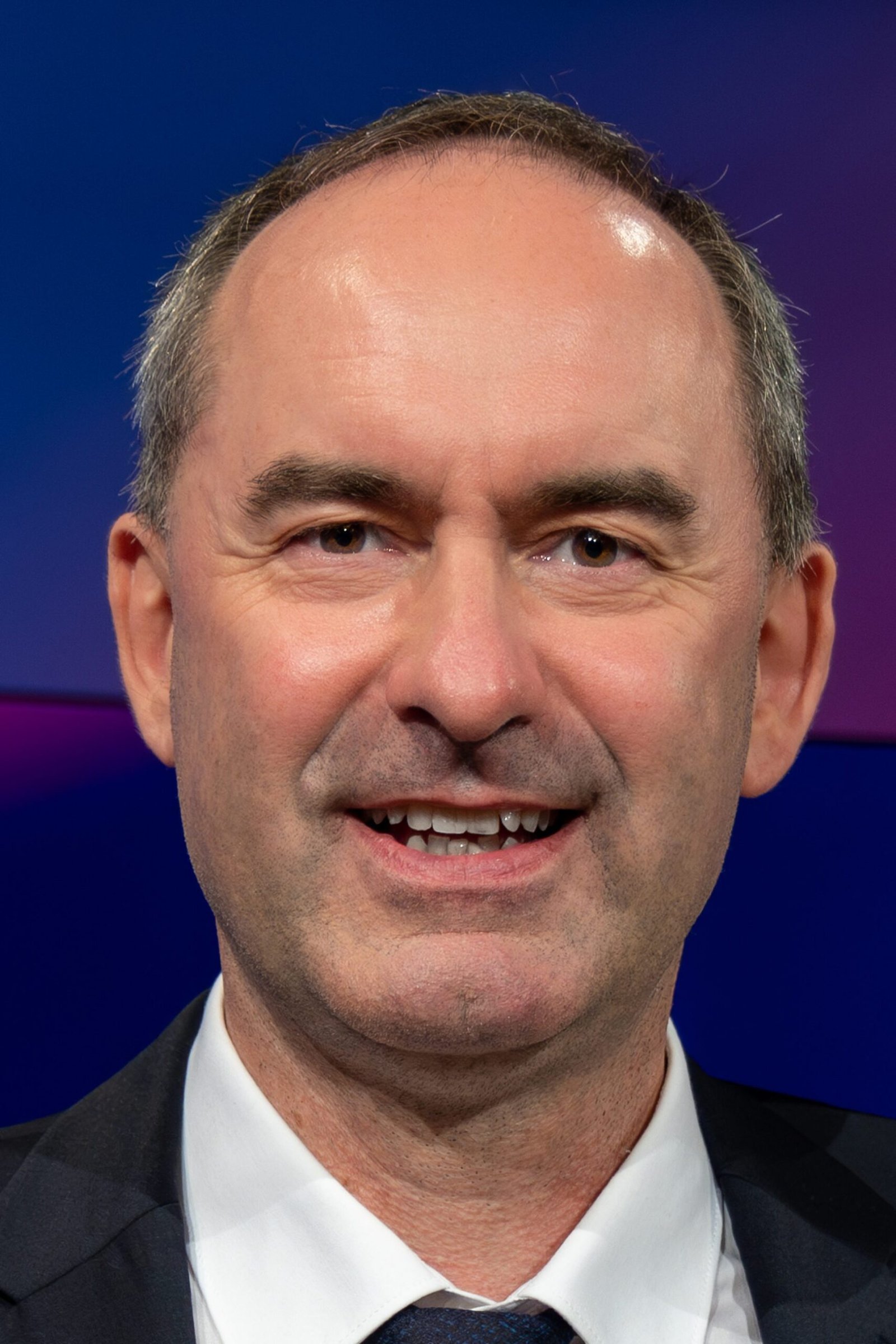
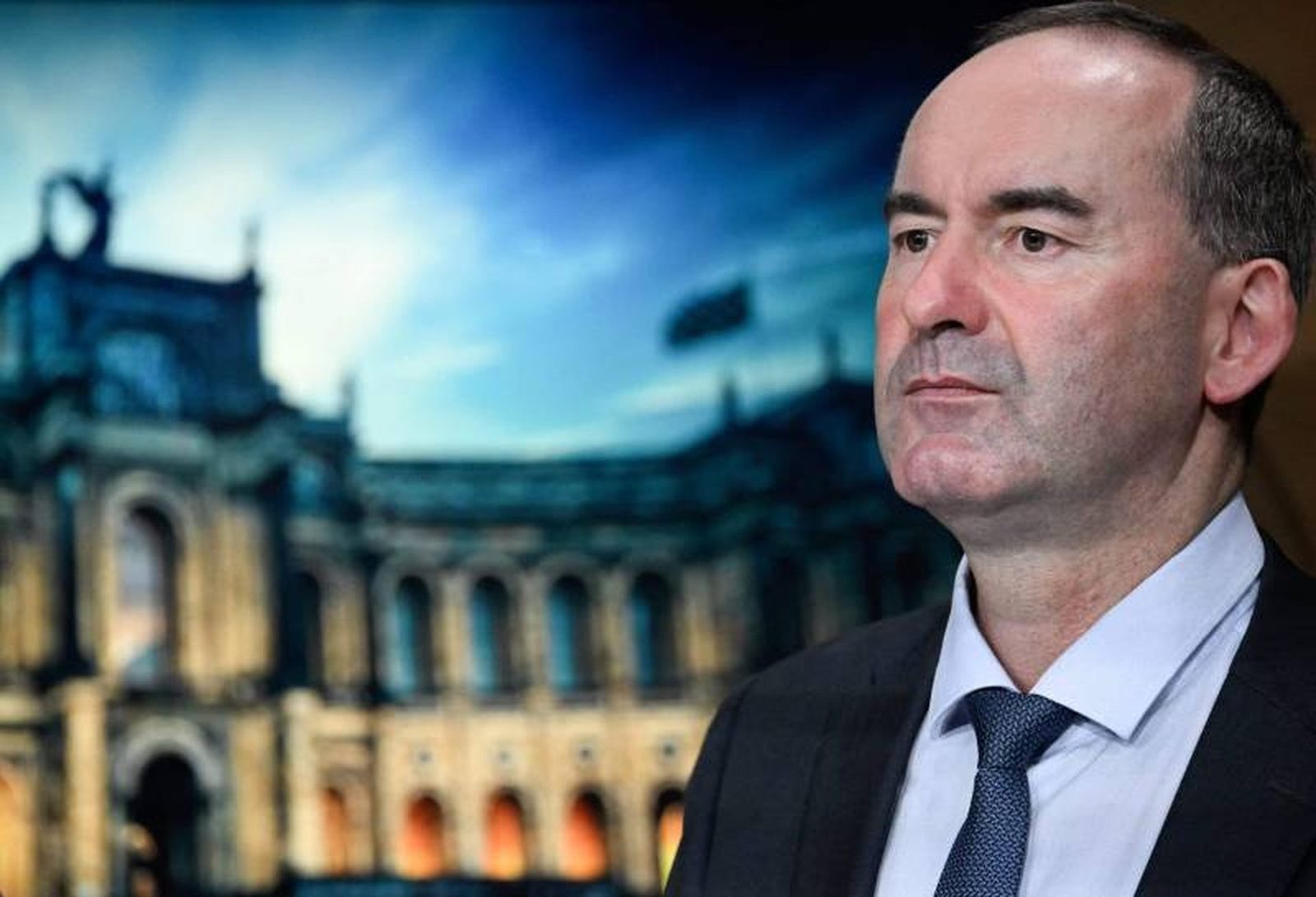
    Hubert Aiwanger, the deputy premier of the German state of Bavaria and leader of the Free Voters party, has been found dead in a Berlin hotel room at the age of 55.

    He was found in the early evening on Wednesday, 4 November, in his room at the Hotel Neuer Fritz on Friedrichstrasse in Berlin’s Mitte district. The Berlin public prosecutor’s office confirmed the death that evening.

    He had travelled to Berlin for the opening of his party’s new office, where he was due to speak on Wednesday afternoon. German media reported he cancelled after feeling unwell and stayed at his hotel. When he could not be reached later, his room was opened and he was found dead.

    Berlin police and prosecutors have opened a death investigation to establish the exact cause and circumstances and to rule out any involvement by another person. In a statement on Thursday, the prosecutors’ office said no external causes were involved, while adding that forensic examinations would continue. It did not specify a cause of death.

    A spokesperson for the prosecutor’s office, Michael Petzold, had earlier told the Bild newspaper there was no initial suspicion of a crime, while nothing could be ruled out at that stage. German media reports said he had been found with no external injuries, and sources in his party’s coalition partner told Bild he had experienced stomach problems.

    A long career in Bavarian politics

    He had sat in the Bavarian state parliament since 2008 and served as the state’s deputy premier and economy minister since 2018. He led the Free Voters, a conservative party rooted in Bavaria’s local politics, and had been one of the most recognisable figures in the state’s politics for almost two decades.

    Born on 26 January 1971 in Ergoldsbach in Lower Bavaria, he grew up on a farm near Rottenburg an der Laaber and trained as an agricultural engineer. He joined the Free Voters ahead of local elections in 2002, led the party in Bavaria from 2006 and took it into the state parliament for the first time in 2008.

    In 2018 his party formed its first coalition with the Christian Social Union, and he became economics minister and deputy head of government. In late summer 2023, weeks before a state election, a leaflet from his school days resurfaced and nearly collapsed the coalition. He admitted having copies in his backpack and called its contents disgusting and inhumane. His party still won a record 15.8 per cent.

    One goal stayed out of reach: taking the Free Voters into the Bundestag, Germany’s federal parliament. He had planned to seek another term as federal chairman at a convention on 14 November. It is unclear whether that date will hold.

    Bavarian Premier Markus Söder wrote on X that the death was an absolute tragedy, adding that his thoughts were with Mr Aiwanger’s family and children. The president of the Bavarian parliament, Ilse Aigner, called it a heavy loss for the state parliament and for politics in Bavaria as a whole.

    State Secretary Tobias Gotthardt will take over the day-to-day business of the Economics Ministry at least temporarily, cutting short a delegation trip to Singapore to return to Bavaria. Mr Aiwanger had two children and lived with Tanja Schweiger, a local politician in Regensburg.

  • Bavaria deputy premier found dead in Berlin hotel

    Bavaria deputy premier found dead in Berlin hotel

    Hubert Aiwanger, the deputy premier of Bavaria and leader of the Free Voters party, has been found dead in a hotel room in Berlin. He was 55.

    Berlin prosecutors and police said in a statement that Aiwanger was found dead in his hotel room in the Berlin-Mitte district. A spokesperson for the Berlin public prosecutor’s office said there was, at that stage, no indication of third-party negligence.

    The cause of death had not yet been determined, and an investigation had been opened. Officials have not yet released any further details about the circumstances in which he was found.

    Aiwanger was in Berlin to attend a coalition committee meeting. The Free Voters party confirmed his death, and Bavarian premier Markus Soder said he had learned of it with great consternation.

    German media reported the death, with the report attributed to German daily Die Welt. The news spread quickly through German politics, where Aiwanger was a well-known figure in Bavarian state politics.

    Aiwanger had said a day earlier that he would step down as leader of the Free Voters at the party’s next conference, while remaining in his other posts. That announcement had already been a significant development in Bavarian politics before news of his death emerged.

    The Free Voters are not represented in the federal parliament, but they are a junior partner in the Bavarian state government led by Soder. Aiwanger served as deputy premier in that government and was one of the most prominent voices of the party at state level.

    His career had also been marked by controversy. In 2023, a leaflet containing antisemitic content was found in his schoolbag from his time as a student. Aiwanger denied writing it but later admitted that copies of the leaflet had been distributed.

    He was also known for criticising Bavaria’s 10H rule, under which wind turbines must be built at a distance at least 10 times their height from residential buildings. The rule has long been a point of debate in Bavarian energy policy.

    On his health, the reports note that Aiwanger suffered a stroke in 2018 and was treated for a severe lung infection in 2019. No connection has been drawn between that history and his death, and officials have said the cause is still to be determined.

    For Bavaria, the death removes a central figure of the state government at a moment when the coalition was meeting in Berlin. The Free Voters will now have to decide how to fill the gap left by the loss of their leader and the state’s deputy premier.

    Further information is expected once prosecutors and police complete their initial inquiries and once an official account of the cause of death is available. Until then, the confirmed facts remain the place and timing of the discovery, the statement from prosecutors, and the confirmation of his death by his party.

  • Tiger Duck creator Janosch dies at 95 after 25m books sold

    Tiger Duck creator Janosch dies at 95 after 25m books sold

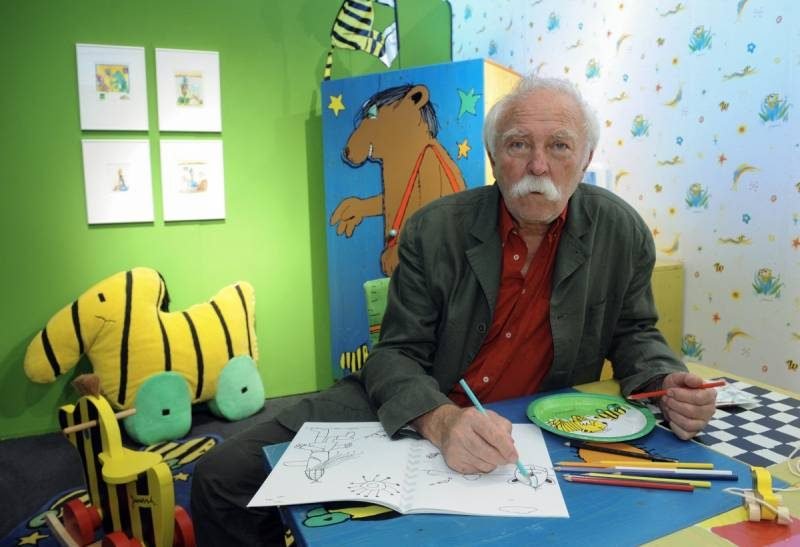
    German children’s book author Janosch has died at the age of 95, bringing to a close one of the most widely loved careers in European children’s literature. He died in Tenerife, Spain, where he had lived since 1980.

    Born Horst Eckert on 11 March 1931 in Hindenburg, Upper Silesia, now Zabrze in Poland, Janosch went on to become a household name for generations of young readers. He was best known for the Tiger Duck, known in German as Tigerente, a character who became a symbol of gentle humour and warmth in his stories.

    The scale of his success was remarkable. His books were translated into 40 languages and sold more than 25 million copies around the world, carrying his stories far beyond his native Germany and into homes, schools and libraries across continents.

    His work also reached television. His series Janosch’s Dream Hour ran from 1986 to 1990, introducing his characters and storytelling style to a new audience of children who may never have picked up one of his books first. The series helped cement his reputation as a storyteller whose appeal crossed formats as well as borders.

    Recognition followed in official form too. In 1993 he received the German Federal Cross of Merit, one of Germany’s highest civilian honours, acknowledging a contribution to culture that had already spanned decades by that point.

    Remarkably, Janosch kept working deep into old age. His last book was published in 2023, when he was in his nineties, a testament to a creative life that did not fade with time. Few authors maintain such a long and productive career, and fewer still remain relevant to new generations of children while doing so.

    What made his work endure is difficult to reduce to a single quality. His stories were simple on the surface, yet they carried a kindness and a sense of wonder that children recognised immediately. Parents who grew up with his books have passed them on to their own children, creating a chain of readership that spans decades.

    The Tiger Duck itself became more than a character in a book. It grew into a cultural emblem, instantly recognisable and fondly remembered, associated with a particular kind of storytelling: unhurried, good-natured and quietly funny.

    Janosch’s death marks the end of an era for German children’s literature, but his books remain in print and in circulation, and his characters continue to be discovered by young readers. For millions of people, the news will prompt memories of childhood reading, of a small tiger duck and the gentle world its creator built around it.