Tag: Election Commission

  • New provinces must reflect public opinion, says Tarar

    New provinces must reflect public opinion, says Tarar

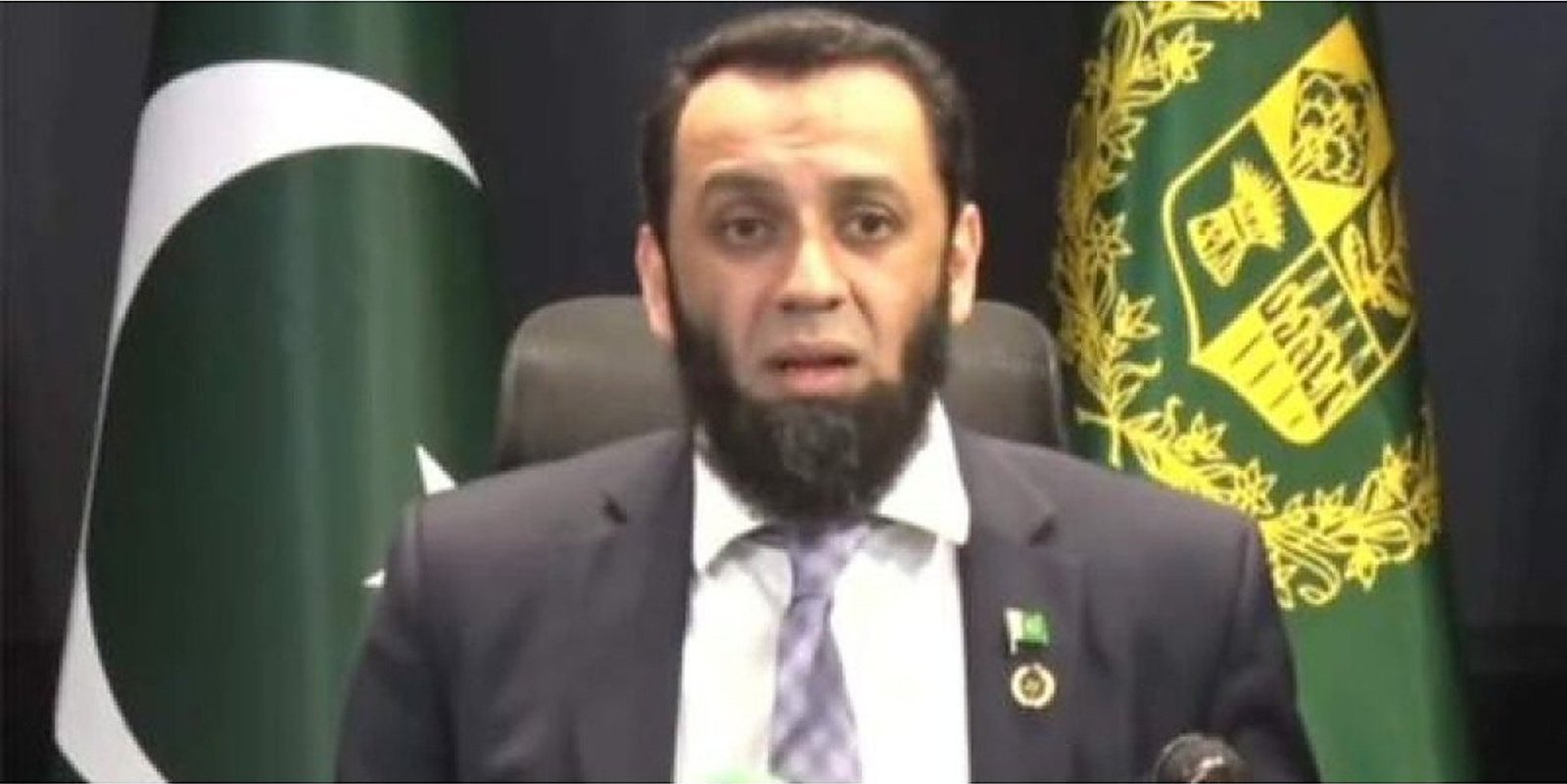
    ISLAMABAD — Federal Information Minister Attaullah Tarar said on Friday that the creation of new provinces should be decided by public opinion, telling reporters outside the Election Commission of Pakistan (ECP) that a referendum could be held to find out what people want.

    “There is no harm in holding a referendum,” Tarar said, adding that the Constitution had a clear provision for a referendum on matters of national importance.

    He said new provinces should be created if the people supported the idea, and the proposal should not be pursued if they opposed it. The public, he said, should be given an opportunity to express its views before any decision was taken, and the way forward could be assessed once public opinion had emerged.

    The remarks were a restatement, rather than a new announcement. Tarar had set out the same position earlier in the week, on Tuesday, and Friday’s comments put that view on the record again in his exchange with reporters outside the election commission.

    Consensus and consultation

    Tarar said the question should be settled by what the people wanted, and that asking them directly through a referendum would be one way of establishing it. He said there should be no objection to putting the matter to the public, and that the decision should follow the opinion that emerged.

    He also said Prime Minister Shehbaz Sharif had met the president, and that various matters had been discussed, including the need to move forward through mutual understanding and consensus.

    The minister was speaking after attending an ECP hearing concerning his visit to Gujranwala.

    The debate over new provinces has drawn responses from Sindh in recent days. Pakistan Peoples Party chairman Bilawal Bhutto Zardari warned on 17 November against dividing Sindh, while Sindh minister Saeed Ghani’s rejection of any division of the province was published on Friday.

    Tarar said the decision should be made only after the public had been heard, and that the next steps would be considered once that opinion had emerged.

    He said the government wanted the decision to reflect the wishes of the people, and that consulting them first was the right way to settle a question of such importance.
  • ECP Reserves Verdict in Case Against Attaullah Tarar

    ECP Reserves Verdict in Case Against Attaullah Tarar

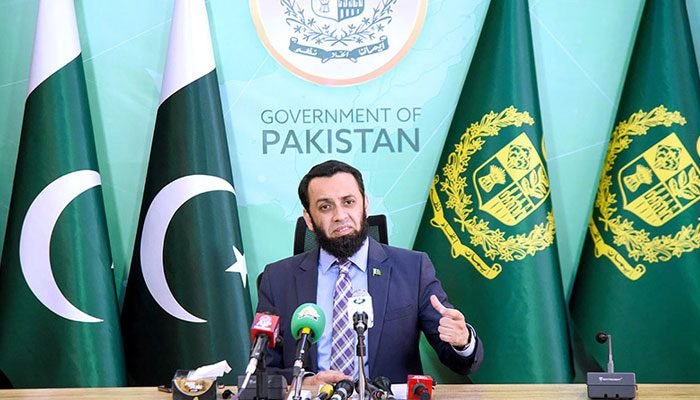
    The Election Commission of Pakistan on Friday reserved its verdict in a case against Information Minister Attaullah Tarar over an alleged violation of the election code of conduct during the NA-77 by-election.

    A three-member bench of the commission, headed by Chief Election Commissioner Sikandar Sultan Raja, heard the case. Tarar also appeared before the commission during the proceedings.

    Representing the minister, his lawyer Sujail Swati argued that Tarar’s visit to the constituency was personal and had no connection with election campaigning. He said the minister had attended the event after receiving a personal invitation from a lawyer, and maintained that the election candidate was not present at the event.

    The lawyer told the commission that Tarar respected the Election Commission and remained committed to fulfilling his responsibilities as a member of parliament. He said the minister had already submitted a written response to the commission, offered an unconditional apology and asked the commission to consider the matter on its merits.

    During the hearing, Chief Election Commissioner Sikandar Sultan Raja observed that Tarar might have attended the event on a lawyer’s invitation, but he also held the position of a federal minister. After hearing the arguments from both sides, the commission reserved its decision.

    Speaking outside the Election Commission after the hearing, Tarar said the question of creating new provinces should be decided in line with public opinion, through a referendum if needed.

    A reserved verdict means the commission has heard the arguments and will announce its decision on a later date, rather than deciding the matter on the spot. Both sides will now wait for the commission to fix a date for announcing the outcome, which will determine whether any action follows under the code of conduct.

    Under the Election Commission’s code of conduct, public office-holders face restrictions on visiting constituencies where by-elections are under way, so that state resources and official influence are not used to affect the contest. The commission will now announce its decision after considering the arguments and the written response placed before it. Until then, no finding has been made against the minister, and the case remains pending.

  • ECP Approves Punjab Local Government Elections in Two Phases

    ECP Approves Punjab Local Government Elections in Two Phases

    The Election Commission of Pakistan (ECP) has approved holding local government elections in Punjab in two phases, with Lahore among the districts included in the first phase, Dunya News reported on Tuesday.

    According to an official letter issued to the Punjab chief secretary on November 17, the commission agreed to the provincial government’s proposal, submitted on November 16, to conduct the local government elections in two stages.

    In the first phase, elections will be held in 18 district groups, including Lahore, Kasur, Nankana Sahib, Pakpattan, Sialkot and Okara. The first phase will also cover Chakwal and Talagang, Rawalpindi and Murree, Dera Ghazi Khan and Taunsa, Rajanpur, Narowal, Chiniot, Khanewal, Bahawalpur, Lodhran, Sargodha, Hafizabad and Bhakkar.

    The second phase will cover another 18 district groups, including Faisalabad, Multan, Sahiwal, Gujranwala and Wazirabad, Bahawalnagar, Attock, Khushab, Mandi Bahauddin, Vehari, Jhelum and Sheikhupura. The remaining areas in the second phase include Muzaffargarh and Kot Addu, Toba Tek Singh, Mianwali, Layyah, Jhang, Gujrat and Rahim Yar Khan.

    The ECP has directed the relevant authorities to complete all necessary preliminary arrangements in a timely manner and accelerate preparations for holding the local government elections. The decision was also reported by 24News and ARY News, which confirmed that the commission had approved the two-phase plan.

  • AJK Election Commission Orders Bazmi’s Name Off Voter List

    AJK Election Commission Orders Bazmi’s Name Off Voter List

    The Azad Kashmir Election Commission has declared the state subject of former assembly candidate Hamza Majeed Bazmi fake and ordered his name removed from the voter list of constituency LA-44 Valley-5, reserved for migrants residing in Pakistan, Kashmir Digital reported on Tuesday.

    The commission held that Bazmi does not meet the definition of a migrant residing in Pakistan, as his family belongs to Muzaffarabad in Azad Kashmir, and he is therefore not eligible to be a voter of the migrants’ constituency.

    Bazmi’s state subject had been challenged by former transport minister Javed Butt, who argued that Bazmi was not a genuine migrant settled in Pakistan and did not hold a valid state subject certificate.

    The petitioner’s counsel argued that Bazmi’s ancestors migrated from Baramulla in 1947 and settled in Muzaffarabad, Azad Kashmir, so he could not be a voter for the seat reserved for migrants residing in Pakistan.

    The commission dismissed Butt’s application on technical grounds, holding that as a resident of another constituency he had no standing to object to a different constituency’s voter list, but used its own powers under Section 28 of the AJK Elections Act 2020 to order Bazmi’s name struck off.

    The decision was issued by Chief Election Commissioner Justice (retd) Ghulam Mustafa Mughal and senior member Muhammad Ahsan.

  • ECP Sets Dec 31 Deadline for Lawmakers to Declare Assets

    ECP Sets Dec 31 Deadline for Lawmakers to Declare Assets

    The Election Commission of Pakistan (ECP) has directed members of Parliament and provincial assembly lawmakers to submit their annual statements of assets and liabilities for the fiscal year 2025-26 by December 31, 2026.

    The direction was issued on Friday. Lawmakers who miss the initial deadline will have a final grace period until January 15, 2027, to file their declarations.

    The statements must declare all assets, possessions and liabilities held as of June 30, 2026. The declarations must also include details for the lawmakers’ spouses and dependent children, making the disclosure a full picture of the family’s holdings.

    The submissions must be filled out on Form B, the prescribed form for annual asset declarations by elected representatives.

    The Election Commission has said it will publish the names of all non-compliant lawmakers on January 1, 2027. Any member who fails to submit the declaration by the January 15 grace period will face immediate suspension of their assembly or Senate membership on January 16, and the suspension will remain in force until the statement is filed.

    Annual asset declarations are a long-standing legal requirement for elected representatives in Pakistan. The exercise is meant to keep a public record of what lawmakers own and owe, and to allow voters and institutions to track changes in their wealth while they hold public office.

    The December 31 deadline gives lawmakers the rest of the year to put their returns together, while the January 15 grace period offers a short window for late filers. The publication of names on January 1 is designed to make the process visible, and the suspension from January 16 is the penalty for those who still do not comply.

    Lawmakers who hold seats in the National Assembly, the Senate or a provincial assembly are all covered by the direction. The commission’s timetable leaves no room for open-ended delay: the names go public first, and membership is suspended next for anyone who remains in default.

    The commission’s announcement sets the calendar for the coming weeks: names published on January 1, the grace period running until January 15, and suspension from January 16. Lawmakers who file on time face no action, while those who do not will first be named publicly and then lose their membership until they comply.

  • ECP deploys 17 officers to watch Islamabad’s local polls

    ECP deploys 17 officers to watch Islamabad’s local polls

    The Election Commission of Pakistan has appointed 17 officers to monitor the Islamabad local government elections, putting a formal monitoring structure in place ahead of polling on 20 December.

    Additional Deputy Commissioner Uzair Ali Khan has been appointed as District Monitoring Officer, with 16 monitoring officers working under the arrangement. Together, they will cover the pre-poll period, election day itself, and the post-poll phase, giving the Commission eyes on the ground through every stage of the contest.

    The monitoring officers will collect information on campaign activities and report violations of the code of conduct on Form M-1. The District Monitoring Officer will record complaints on Form M-2 and submit daily reports to the Election Commission, creating a regular flow of information from the field to the Commission.

    Local administration has also been directed to appoint a focal person of Grade 17 or above, to coordinate with the monitoring setup. That appointment is intended to make sure the monitoring officers have a clear point of contact within the local administration for the work they are asked to do.

    The appointments follow a nomination process that drew only 39 candidates for 125 union councils, out of 1,012 candidates who had obtained nomination papers. The Election Commission, quoted in reporting on the nominations, attributed the low participation to the powers and funds available to local bodies, and had extended the nomination deadline to 4 November.

    Against that background, the monitoring appointments take on added importance. With fewer candidates contesting, the conduct of the campaign and the polling process itself will be watched closely, and the Commission’s monitoring officers are the mechanism for that oversight.

    Islamabad’s local government elections matter because they decide who runs civic affairs in the capital’s union councils, from local services to community-level decisions. Even where contests are thin, the process of electing those representatives is a formal part of local democracy, and the Commission is responsible for ensuring it is conducted fairly.

    The named monitoring officers include Anjum Hayat, Abdul Razzaq, Shahid Hussain, Usman Rashid, Shaoor Ahmed, Shabbir Hussain Sandhu, Arif Ali, Azizur Rehman and Nisar Muhammad Khan, each assigned specific union councils. Their assignments give the monitoring structure a defined geographic spread across the capital.

    With polling set for 20 December, the monitoring team now has the weeks ahead to track campaigning, record any violations, and report back to the Commission. Their daily reports will form part of the record on which the Commission judges whether the elections were conducted in line with its code of conduct.

  • ECP Proposes Rules to Curb AI Misuse in Elections

    ECP Proposes Rules to Curb AI Misuse in Elections

    ISLAMABAD: The Election Commission of Pakistan (ECP) has proposed amendments to the 2023 codes of conduct for political parties, media organisations and election observers to curb the misuse of artificial intelligence (AI) during elections, according to sources in the commission.

    The draft amendments, reported by The Express Tribune on October 26, set out changes for media organisations, political parties and candidates, and election observers. The commission has sought public and stakeholder feedback on the proposals by November 20. The measures are aimed at regulating AI-generated content, prohibiting deceptive deepfakes and ensuring transparency in election-related communication.

    Under the proposed rules for the media, outlets would be required to clearly disclose when content generated or modified through AI is broadcast, published or released. Media organisations would still be permitted to use AI tools for preparing, translating, presenting or analysing election-related content, provided they disclose that use to their audiences and remain responsible for the authenticity and accuracy of the material.

    The draft strictly prohibits the use of deepfake technology to create fabricated images, voices or statements of political party leaders, candidates, election officials, members of the judiciary, armed forces personnel and other state officials, where the content is false, defamatory or intended to ridicule them. The proposal reflects growing concern that realistic fake audio and video could mislead voters during a campaign.

    Political parties and candidates would also face new obligations under the draft. They would be required to clearly label AI-generated or altered material, and would be prohibited from using such content to mislead voters about a person’s image, words or actions. The draft also proposes a ban on bots and automated accounts used to artificially influence online activity or create false trends, and requires automated campaign calls or messages using cloned voices to begin with a clear notice that they were created using AI.

    Monitoring and enforcement would involve several regulators. According to the report, Pemra, the Social Media Protection and Regulatory Authority and the National Cyber Crime Investigation Agency would monitor undisclosed or unlabelled AI-generated media content and report violations to the ECP, with appropriate action to be taken in cases of non-compliance.

    The proposed amendments also require media houses to promptly remove misleading or undisclosed AI-generated content from their platforms, or correctly relabel it, when directed by a regulatory body or the ECP. Election observers, meanwhile, would be required to identify cases of AI manipulation and report them to the commission, while being prohibited from generating or altering their own findings, photographs, videos and reports using AI.

    The proposals come as AI tools become cheaper and easier to use, raising questions for election authorities around the world about how to protect voters from manipulation without restricting legitimate campaigning and journalism. The ECP’s consultation, which runs until November 20, will give political parties, media bodies and civil society a chance to respond before any final rules are adopted.

  • Srinagar: INDIA Bloc Protests, Demands CEC’s Resignation

    Srinagar: INDIA Bloc Protests, Demands CEC’s Resignation

    Jammu and Kashmir’s regional parties — the ruling National Conference (NC) and the Peoples Democratic Party (PDP) — joined a Congress-led protest in Srinagar on Saturday under the opposition INDIA bloc’s ‘Save Democracy Week’ campaign, demanding the resignation of Chief Election Commissioner (CEC) Gyanesh Kumar over alleged fraud in the voter lists.

    According to The Hindu, dozens of NC and PDP workers, including women, carrying their party flags assembled at the Congress party headquarters in Srinagar. The protesters attempted to march towards Lal Chowk but were disallowed by security forces, after which they staged a symbolic protest inside the Congress office compound. The demonstrators carried placards of Prime Minister Narendra Modi and CEC Kumar, and demanded the CEC’s resignation over what they described as ‘vote chori’ (vote theft).

    Joint protests by the INDIA bloc parties were also held in central Kashmir’s Ganderbal and south Kashmir’s Anantnag on the same day, according to the report. Gayas Ahmad, a protester in Ganderbal, told reporters that workers of the NC, PDP and CPI(M) were holding the protest jointly and peacefully, seeking an inquiry into the CEC’s functioning and his resignation, and that those responsible for vote theft should face the law.

    The campaign, also billed as ‘Vote Bachao, Desh Bachao’ (Save Vote, Save Country), is a nationwide opposition movement targeting the Election Commission of India over the Special Intensive Revision (SIR) of electoral rolls, after reports that millions of voters faced exclusion or list modifications, according to the Lokmat Times. Leaders at the Srinagar protest accused the Centre of undermining democratic institutions and urged people to unite in defence of the Constitution.

    Meanwhile, J&K Chief Minister Omar Abdullah and PDP chief Mehbooba Mufti drew parallels between the security restrictions imposed in Delhi and the situation in Kashmir in 2019. In a post on X on October 9, Mr. Abdullah wrote, ‘Kashmir model has been exported to Delhi. Welcome to the New Delhi, modelled on New Jammu & Kashmir,’ referring to the security clampdown and internet shutdown in the national capital ahead of protests there.

    Ms. Mufti, the former J&K chief minister, said in a post that ‘today’s Delhi is a chilling reminder of Kashmir after the unconstitutional abrogation of Article 370,’ when, she said, people were locked in their homes and the internet was shut down. ‘First crush the protest, then deny it ever happened. This is how enforced silence is passed off as consent,’ she added.

    The protest comes amid a wider opposition campaign against the election watchdog, with INDIA bloc leaders calling on people across the country to defend democratic institutions. Security personnel were deployed in strength around the Congress headquarters to prevent the march, and the protesters eventually withdrew into the office compound.

  • AJK Election Commission notifies four unopposed AJK Council members

    AJK Election Commission notifies four unopposed AJK Council members

    Muzaffarabad: The Azad Jammu and Kashmir Election Commission has issued the formal notification for four members elected unopposed to the Azad Jammu and Kashmir Council.

    According to the commission, the members were declared elected on the basis of results received from the returning officers. Those notified are Pakistan Muslim League-Nawaz leaders Mushtaq Ahmed Minhas, Chaudhry Muhammad Saeed and Chaudhry Manzoor Ahmed, along with Pakistan Peoples Party leader Chaudhry Latif Akbar.

    The notification says Chaudhry Latif Akbar and Chaudhry Manzoor Ahmed represent the Muzaffarabad division, Mushtaq Ahmed Minhas represents the Bagh division, and Chaudhry Muhammad Saeed represents the Mirpur division. The names were published under Section 18 of the Azad Jammu and Kashmir Council (Election) Act, 1976.

    The four seats had fallen vacant after the completion of the previous members’ five-year terms. Although polling had initially been scheduled for October 12, the candidates were declared elected unopposed after the nomination process was completed.