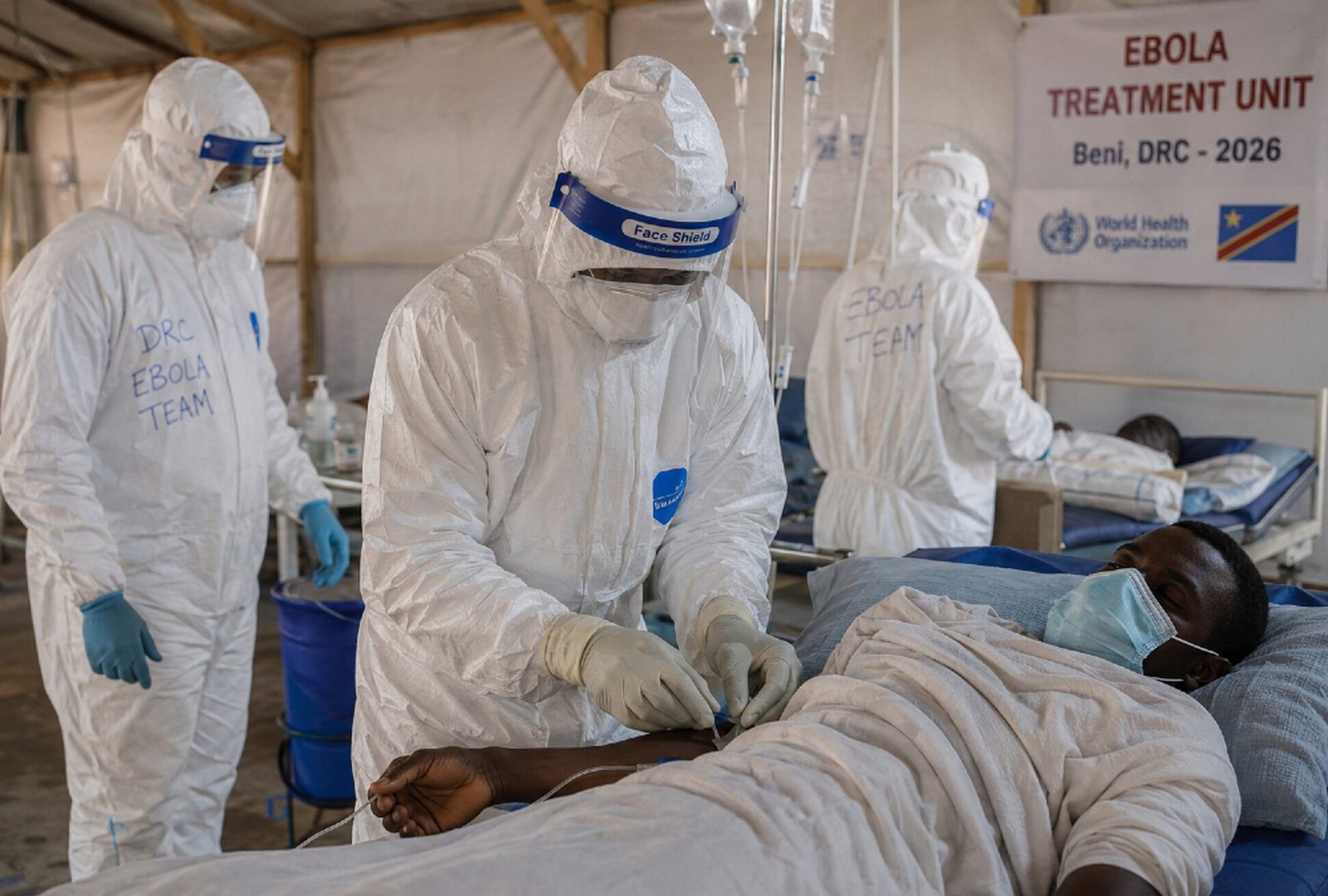
The Ebola outbreak in the Democratic Republic of Congo has crossed a grim new threshold, with confirmed cases passing 11,000 and the death toll climbing past 5,300, according to government figures released on Tuesday.
The latest national count puts confirmed infections at 11,042 and deaths at 5,387, health ministry data showed. That makes this the largest and deadliest Ebola outbreak in Congo’s history, and the second-largest and second-deadliest ever recorded anywhere, behind only the 2014 to 2016 epidemic in West Africa, which infected more than 28,600 people and killed over 11,000.
A virus with no vaccine
The outbreak is caused by the rare Bundibugyo strain of the Ebola virus and was officially declared in mid-May, although experts believe it may have been circulating for weeks or even months before that. It is the 17th Ebola outbreak in Congo’s history. There is still no licensed vaccine and no approved specific treatment for this strain, which kills roughly half of the people it infects. The national public health institute puts the case fatality rate at 48.8 per cent, and about 2,990 people have recovered so far.
The virus has now reached eight of Congo’s 26 provinces, the widest spread of any Ebola outbreak recorded on the African continent. Ituri province, where the outbreak began in the north-east, remains the epicentre, accounting for almost 70 per cent of all infections, followed by North Kivu. The World Health Organization counted 10,668 confirmed cases and 5,198 deaths across 67 health zones as of 3 November, with active transmission still under way in 51 of them.
Why it keeps spreading
Health workers say the response has been held back by a combination of armed conflict, a health system under severe strain, poor roads and mistrust among residents, which has at times turned violent. Many people have died outside treatment centres, and delayed detection has allowed the virus to travel further before cases are found. The International Organization for Migration says 71 confirmed cases have been detected at transit points it supports, and 95 per cent of them were found on informal routes rather than at formal checkpoints.
There is some hope on the horizon. Earlier this month the World Health Organization approved clinical trials of two candidate vaccines, with results expected in early 2027, and a trial known as Tumaini began in the town of Bunia on 23 October. Congolese scientists have also sequenced more than 1,500 complete viral genomes in under six months, work that helps track how the virus is moving. For now, though, health officials say the priority remains finding cases faster, reaching communities that are hard to access and keeping treatment centres running, as the outbreak enters its seventh month with no sign yet of slowing down.
