Tag: Civil Service

  • CSS 2027 Written Exam on January 27 Across 19 Cities

    CSS 2027 Written Exam on January 27 Across 19 Cities

    The Federal Public Service Commission has announced that the written examination for the Central Superior Services (CSS) 2027 will be held on January 27, 2027, giving thousands of candidates across the country a firm date to work towards. The announcement ends months of waiting for aspirants preparing for the country’s most competitive examination.

    The examination will be conducted in 19 cities, including Lahore, Karachi, Islamabad, Rawalpindi, Peshawar, Quetta, Multan, Faisalabad, Sargodha, Gujranwala, Abbottabad, Dera Ismail Khan, Hyderabad, Sukkur, Larkana, Bahawalpur, Dera Ghazi Khan, Gilgit and Muzaffarabad. The wide spread of centres means candidates from every part of the country, including Azad Jammu and Kashmir and Gilgit-Baltistan, will be able to sit the examination close to home.

    The examination will consist of 12 papers. Six of these are compulsory: English Essay, English (Precis and Composition), General Science and Ability, Current Affairs, Pakistan Affairs and Islamic Studies. Candidates will also choose six optional papers from seven groups, allowing them to play to their academic strengths alongside the common core.

    The commission has advised candidates to check the FPSC website for the complete schedule and further details, including the timing of each paper and the arrangements at examination centres. The examination will be conducted in a transparent manner, the commission said, as it prepares for one of the largest competitive examinations in the country.

    For many graduates, the CSS examination is the gateway to the civil service and a career in the federal government. Competition is intense, with only a small share of those who sit the written papers going on to the interview stage and final selection, which makes early preparation and a clear timetable especially important.

    With the date now fixed, coaching academies and study circles are expected to intensify their preparation schedules, and candidates will be counting down the weeks to January 27. The commission’s announcement gives them a clear target, and the months ahead will be spent on revision, mock examinations and the long reading lists that the CSS papers demand.

    The 19-city spread is one of the widest in recent years, and the inclusion of Muzaffarabad and Gilgit alongside the major cities reflects the commission’s effort to make the examination accessible across the country. Candidates now have a clear runway to the examination hall, and for many the hard work of preparation has already begun in earnest.
  • 187 officers nominated for 48th mid-career course

    187 officers nominated for 48th mid-career course

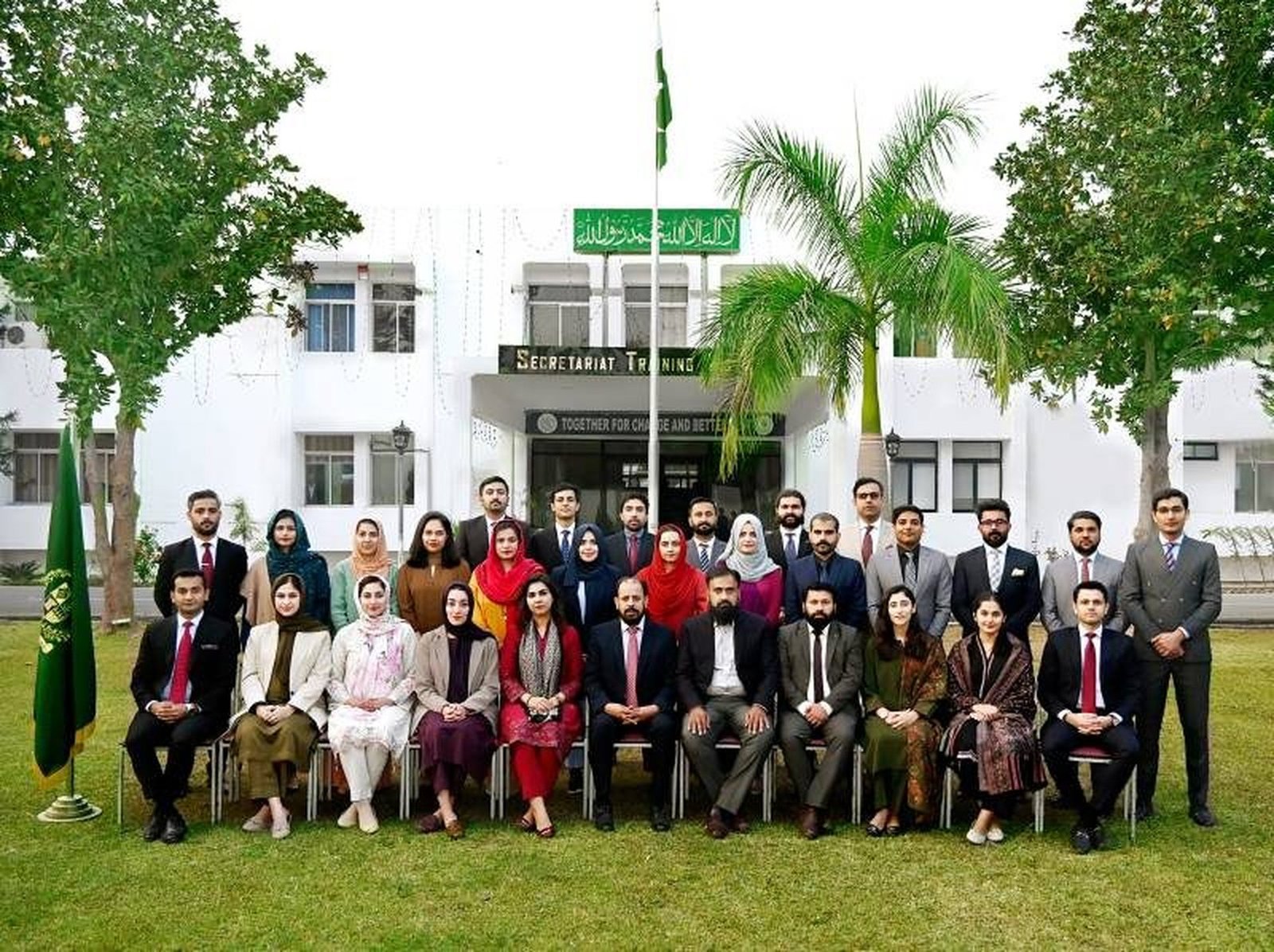
    The Establishment Division in Islamabad has nominated 187 officers for the 48th Mid-Career Management Course, a training programme for civil servants at the middle stage of their careers. The nominations cover officers drawn from several service groups, reflecting the broad reach of the course across the federal bureaucracy.

    Among the 187 officers, 38 belong to the Establishment Division itself. The remaining nominations come from the Pakistan Administrative Service, the Police Service of Pakistan, the Secretariat Group and other groups, bringing together officers whose day-to-day work spans administration, policing and the running of government offices.

    The training will be held at the National Institutes of Management in Islamabad and Karachi, with the course starting on 24 November. Splitting a large cohort between two institutes is a practical arrangement, allowing the programme to run for a sizeable group of officers without overloading a single campus.

    Mid-career courses occupy an important place in the career path of a civil servant. By the time officers reach this stage, they have usually spent years handling field postings, office assignments or operational duties, and they carry practical experience of how government works on the ground. A structured course at this point gives them a chance to step back, compare experiences with colleagues from other services, and prepare for more senior responsibilities.

    The mix of services in a single cohort is part of the point. An officer from the administrative service, a police officer and a secretariat officer may approach the same problem very differently, shaped by the institutions they serve. Bringing them into the same classroom encourages a shared understanding of how decisions in one part of government affect the others, which matters when policies must be carried out across departments.

    The National Institutes of Management have long served as the venue for this kind of training. Their role is to provide a setting away from daily office pressures where officers can focus on management, policy and leadership, and where discussion with peers becomes as valuable as formal instruction.

    For the officers nominated, the course also marks a milestone. Nomination for a mid-career programme is a sign of progression in service, and completion of such training is generally seen as part of preparation for higher roles. It is a stage where officers are expected to move from handling individual assignments to thinking about institutions, teams and longer-term outcomes.

    The inclusion of 38 officers from the Establishment Division itself is notable, since the division is the very body that oversees civil service matters, including nominations and training. Their presence alongside colleagues from other groups underlines that the course is intended for the service as a whole, not for any single cadre.

    As the 24 November start date approaches, the nominated officers will be preparing to take time away from their postings for the programme. For the institutes in Islamabad and Karachi, the task will be to turn a diverse cohort of 187 officers into a group that returns to its departments with fresh perspective and a wider professional network.