Tag: calls

  • D-8 Chief Calls for Stronger Halal Economy Cooperation

    D-8 Chief Calls for Stronger Halal Economy Cooperation

    ISTANBUL — Secretary-General of the Developing-8 Organization for Economic Cooperation (D-8), Ambassador Sohail Mahmood, has called for stronger international cooperation, investment and trade partnerships to harness the potential of the global halal economy as a driver of sustainable economic growth.

    He was addressing the opening ceremony of the 12th World Halal Summit and Halal Expo 2026 at the Istanbul Expo Center, where he highlighted the need to strengthen halal standards, develop sustainable value chains and mobilise investment for a more inclusive and competitive global halal economy.

    The four-day event, being held from November 25 to 28 under the auspices of Turkish President Recep Tayyip Erdogan, is themed “Sustainable Halal Economy: Eliminating Waste, Empowering Growth”. It has brought together government officials, international organisations, halal certification authorities, business leaders, academics and industry experts.

    The opening ceremony featured addresses by high-level dignitaries, including Turkish Minister of Trade Prof Dr Ömer Bolat, as well as senior representatives of participating countries and international and regional organisations.

    In his remarks, Ambassador Mahmood commended the Government of Türkiye and the organisers for convening the summit on a timely and forward-looking theme. He highlighted the significance of the Islamic principles of Halal and Tayyib, together with the Islamic injunction against wastefulness, in fostering an economic model that reconciles commercial prosperity with environmental stewardship and social responsibility.

    The Secretary-General underlined the immense potential of the global halal economy as a driver of economic growth, innovation, investment and employment generation. Referring to the scale of global food waste, he stressed that eliminating waste was not merely an environmental responsibility but also an economic necessity.

    In this context, he recalled the special message of the First Lady of Türkiye, Emine Erdogan, to the D-8 High-Level Ministerial Session on Climate Action held during COP31 in Antalya, in which she stressed food waste prevention, improved resource efficiency, education and greater public awareness. She also encouraged the development of a D-8 Zero Waste Roadmap in line with the priorities of member states.

    Ambassador Mahmood also highlighted the recently adopted Antalya Ministerial Action Framework on D-8 Climate and Environmental Cooperation and reaffirmed the organisation’s commitment to contributing to the global Zero Waste Movement.

    He underlined the progressive integration of the halal economy within the D-8’s strategic priorities, as illustrated by the convening of the inaugural D-8 Halal Expo in Indonesia in July 2026. He noted Indonesia’s intention, as the incoming D-8 Chair, to accord priority to the halal economy during its chairmanship, as well as its proposal to host a D-8 Halal Economy Cooperation Secretariat.

    In furtherance of the D-8’s target of achieving US$500 billion in intra-D-8 trade by 2030, the Secretary-General reiterated his proposals for an Integrated D-8 Halal Trade Corridor and a Digital Halal Marketplace and Investment Platform. Such initiatives, supported by the effective use of the D-8 Preferential Trade Agreement and closer cooperation with SMIIC, could facilitate market access, strengthen investment flows, enhance supply-chain efficiency and promote industrial innovation across member states, he said.

    He set out three strategic priorities for advancing cooperation in the halal economy: strengthening halal standards, certification and mutual recognition arrangements; developing sustainable halal value chains through digital transformation, the responsible use of artificial intelligence, resource-efficient production and circular economy solutions; and mobilising investment and financing.
  • Pakistan calls for end to Gulf tensions at UN

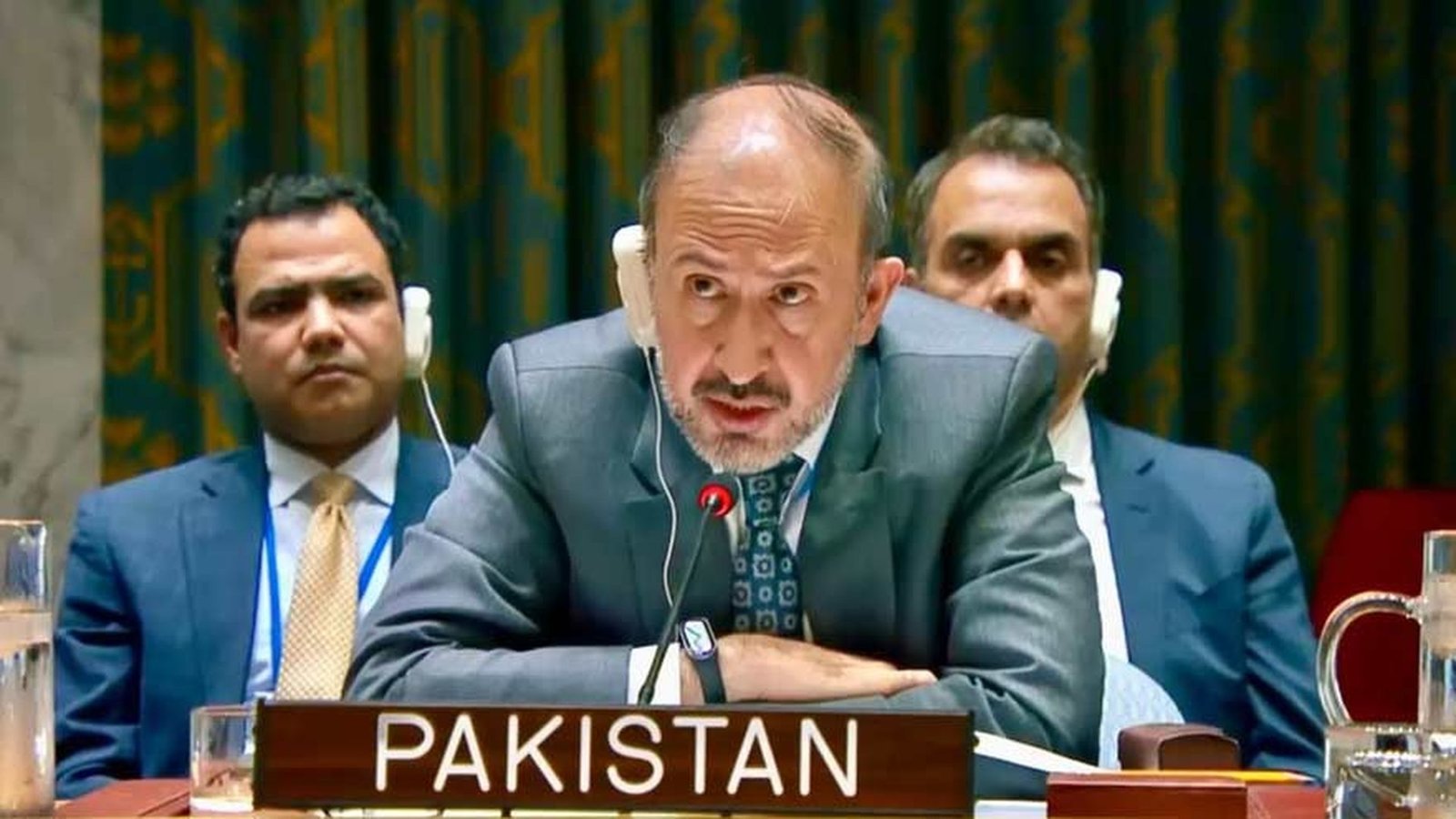
    Pakistan calls for end to Gulf tensions at UN

    Pakistan has called for an immediate halt to military provocations in the Gulf and a return to diplomacy, as the United States, Iran and Gulf Cooperation Council (GCC) countries traded accusations at a United Nations Security Council meeting over attacks on shipping and threats to maritime security.

    Addressing the Council, Pakistan’s Permanent Representative to the UN, Ambassador Syed Haider Shah, condemned attacks on Gulf countries and stressed the need to respect their sovereignty and territorial integrity, protect civilians and commercial vessels, and restore normal maritime traffic.

    He said volatility at the maritime chokepoints had imperilled peace and stability, pushed up energy prices and heightened fears of global food insecurity. He warned that the Strait of Hormuz carries one third of globally traded crude oil and a significant share of the global fertilizer trade.

    He particularly condemned attacks and threats by Houthi militants against Saudi Arabia, including strikes on civilian infrastructure and vessels involved in lawful trade, and reaffirmed Pakistan’s support for Saudi Arabia’s sovereignty, security and territorial integrity.

    He said lasting peace required addressing the root causes of regional conflicts, and urged all sides to stop attacks, keep communication channels open and support diplomatic initiatives, including the UN secretary-general’s good offices.

    US and Iran trade blame

    The US representative, Ambassador Jennifer Locetta, rejected Iran’s position and accused Tehran of aggression against neighbouring countries and threats to commercial shipping. She said Iranian missiles, drones and alleged unlawful mines in the Strait of Hormuz, as well as attacks in the Bab el-Mandab Strait, endangered international shipping. She cited Security Council Resolution 2817, which calls on Iran to stop attacks against neighbouring states and shipping and has 136 co-sponsors.

    Iranian Ambassador Gholamhossein Darzi accused Western countries of ignoring the origins of the conflict and attempting to portray Iran as responsible. He blamed US and Israeli military operations launched on June 13, 2025, and February 28, 2026, for the prevailing insecurity, saying they violated international law.

    Darzi claimed that 5,000 people, including 254 children, had been killed, describing the strikes as war crimes and crimes against humanity. He said threats around the Strait of Hormuz were a direct consequence of those attacks. He rejected Resolution 2817 as politically motivated and said Tehran remained open to diplomacy, but wanted Washington to end its military operations and lift what he described as unlawful coercive measures.

    GCC cites attacks on member states

    GCC Secretary-General Jasem Mohamed Albudaiwi said Gulf countries had been targeted by more than 7,000 Iranian missiles and drones since February 28, hitting airports, ports, oil and gas installations, power stations, desalination plants and residential areas. He called the attacks violations of the sovereignty and territorial integrity of GCC states and urged Security Council action to prevent their recurrence.

    Bahrain’s Ambassador Jamal Fares Alrowaiei, speaking for the GCC, welcomed mediation initiatives by Oman, Qatar and Pakistan and said Gulf states must be part of any negotiations on regional security.

    The meeting underscored deep divisions over responsibility for the crisis, despite calls for a diplomatic settlement. Participants stressed restoring freedom of navigation, protecting commercial vessels and civilian infrastructure, ensuring the safety of seafarers and maintaining access for humanitarian supplies. Pakistan reaffirmed its commitment to working with Gulf states and international partners to reduce tensions and promote lasting regional peace and stability.

  • Naqvi calls on President Zardari as political deadlock persists

    Naqvi calls on President Zardari as political deadlock persists

    Interior Minister Mohsin Naqvi called on President Asif Ali Zardari amid the ongoing political deadlock, consulting the country’s top political leadership and legal experts as tensions between the government and the opposition persisted.

    According to Dunya News, the meeting took place on Saturday as the second round of negotiations between the government and the opposition was underway at Parliament House. The consultations came at a time when the two sides remained divided over the PTI’s planned protest march and counterterrorism policy in Khyber Pakhtunkhwa.

    Footage broadcast after 9:30pm showed the interior minister departing Parliament House carrying a document, with media reports suggesting he was likely to consult the president. He returned to Parliament House more than an hour later, maintaining silence as reporters sought his comments.

    Wider consultations

    The meeting with the president followed the government’s decision to extend the deployment of 3,000 Rangers personnel in Islamabad until October 15, with shipping containers positioned on key routes into the capital ahead of the PTI march that began from Lakki Marwat on Sunday.

    Earlier in the week, Prime Minister Shehbaz Sharif had also met President Zardari at Aiwan-e-Sadr to discuss the overall political and security situation, with the two leaders expressing concern over the security situation in Khyber Pakhtunkhwa and stressing the need for coordination among institutions for peace and stability.

    The government-opposition talks, chaired by National Assembly Speaker Ayaz Sadiq, ended without agreement, leaving both the political confrontation and the dispute over counterterrorism policy unresolved.

    Earlier in the week, Prime Minister Shehbaz Sharif had met President Zardari at Aiwan-e-Sadr on October 1, where the country’s overall political and security situation was discussed. According to The News, the meeting expressed concern over the security situation in Khyber Pakhtunkhwa and stressed the need to strengthen national resolve against terrorism and ensure effective coordination among relevant institutions.

    It was decided at that meeting that a joint delegation of the federal government and the Pakistan Peoples Party would meet PTI leaders to discuss the political situation. The delegation included Interior Minister Mohsin Naqvi, Adviser on Political Affairs Rana Sanaullah and Minister for States and Frontier Regions Amir Muqam, while the PPP was represented by Senator Sherry Rehman, Syed Naveed Qamar and Aijaz Jakhrani.