Tag: Brent crude

  • Oil Prices Set for Second Weekly Decline

    Oil Prices Set for Second Weekly Decline

    Oil prices were mixed on Friday, 13 November, but remained on course for a second consecutive weekly decline, as the United States signalled it would keep its blockade on Iran in place, easing fears of a renewed large-scale conflict that could disrupt oil supplies from the Middle East.

    Brent crude futures were little changed, down just 1 cent at $95.41 a barrel at 0242 GMT, while US West Texas Intermediate crude fell 20 cents, or 0.25 percent, to $88.52 a barrel, according to Reuters.

    Brent was set for a 2.4 percent drop over the week, after plunging 16 percent the previous week, while WTI was heading for a 2.5 percent weekly decline after falling 13 percent last week.

    Blockade set to stay, Trump signals

    US President Donald Trump said on his Truth Social platform that no deal with Iran was needed to end the war, a message traders read as a signal that the blockade would continue. Friday’s declines reversed two days of gains in the oil market.

    The prospect of the blockade staying in place has reduced the chance of renewed large-scale fighting that could disrupt supplies from the region. However, attacks on shipping remain a danger, keeping traders cautious about the outlook for Middle East supplies.

    US stockpiles rise sharply

    Fresh data from the US Energy Information Administration also weighed on prices. US crude inventories rose by 4.7 million barrels to 414.4 million barrels in the week ended 6 November, while analysts had expected a draw of 1.1 million barrels.

    The bigger-than-expected build in stockpiles pointed to softer demand in the world’s largest oil consumer and added to the pressure on prices, which had already fallen steeply over the past two weeks.

    What it means for Pakistan

    For Pakistan, the fall in global prices could bring some relief at the pump. Petrol is currently priced at Rs332 per litre and diesel at Rs360 per litre, according to Daily Hayat’s earlier report today.

    Azaad Urdu reports that the government has been cutting petrol and diesel prices in recent weeks and that further relief is possible if global prices keep falling. Any change in local fuel prices, however, will depend on the government’s next fortnightly review and on the rupee’s movement against the dollar.

    Traders will now watch whether the blockade holds and whether shipping through the region stays safe, as both factors will shape where oil prices head in the coming weeks.
  • Oil prices drop over $1 as peace talks lift hopes

    Oil prices drop over $1 as peace talks lift hopes

    Oil prices fell by more than $1 a barrel on Thursday as hopes for progress in peace talks over the Middle East and the war in Ukraine eased concerns about supply, Reuters reported.

    Brent crude futures lost $1.14, or 1.2 percent, to $91.62 a barrel by 0141 GMT, while US West Texas Intermediate crude fell $1.04, or 1.2 percent, to $85.49 a barrel.

    Traders were encouraged by signs of movement on two fronts. In Abu Dhabi, negotiators at two days of US-mediated talks between Russia and Ukraine agreed a major prisoner exchange before the sessions ended on Wednesday, although American mediators cautioned that deep differences remained on other issues, including territory. US envoys Jared Kushner and Steve Witkoff are now taking the framework to separate capitals to brief the Russian leadership and coordinate further steps with Ukrainian and European partners.

    Hiroyuki Kikukawa, chief strategist at Nissan Securities Investment, told Reuters that markets were falling on expectations that behind-the-scenes efforts were under way to secure a ceasefire between Russia and Ukraine, and that the war in Iran was unlikely to escalate ahead of a US-China summit next week.

    In the Middle East, Iranian security chief Mohsen Rezaei has said he will not allow even a single particle of enriched nuclear material to leave the country, and warned there would be consequences if the United States launched new strikes. Washington, for its part, says nuclear issues must be part of any initial negotiations with Iran, while US officials have played down the need for further military action.

    Russia’s chief negotiator, Vladimir Medinsky, said mutual understanding had been reached on some issues, including groundwork for a prisoner exchange involving more than 1,000 captives from each side, while stressing that major differences remained. Moscow has also questioned the need for an immediate European role in the talks, while Kyiv and its European allies insist Europe must have a seat at every stage of real diplomacy.

    The fall followed gains in the previous session, when Brent rose about 1.4 percent and WTI about 0.6 percent. Official stockpile data from the US Energy Information Administration is due later on Thursday, delayed by a day because of a US national holiday on Wednesday.

  • Two Gulf Tankers Attacked, Sailor Killed as Oil Prices Jump

    Two Gulf Tankers Attacked, Sailor Killed as Oil Prices Jump

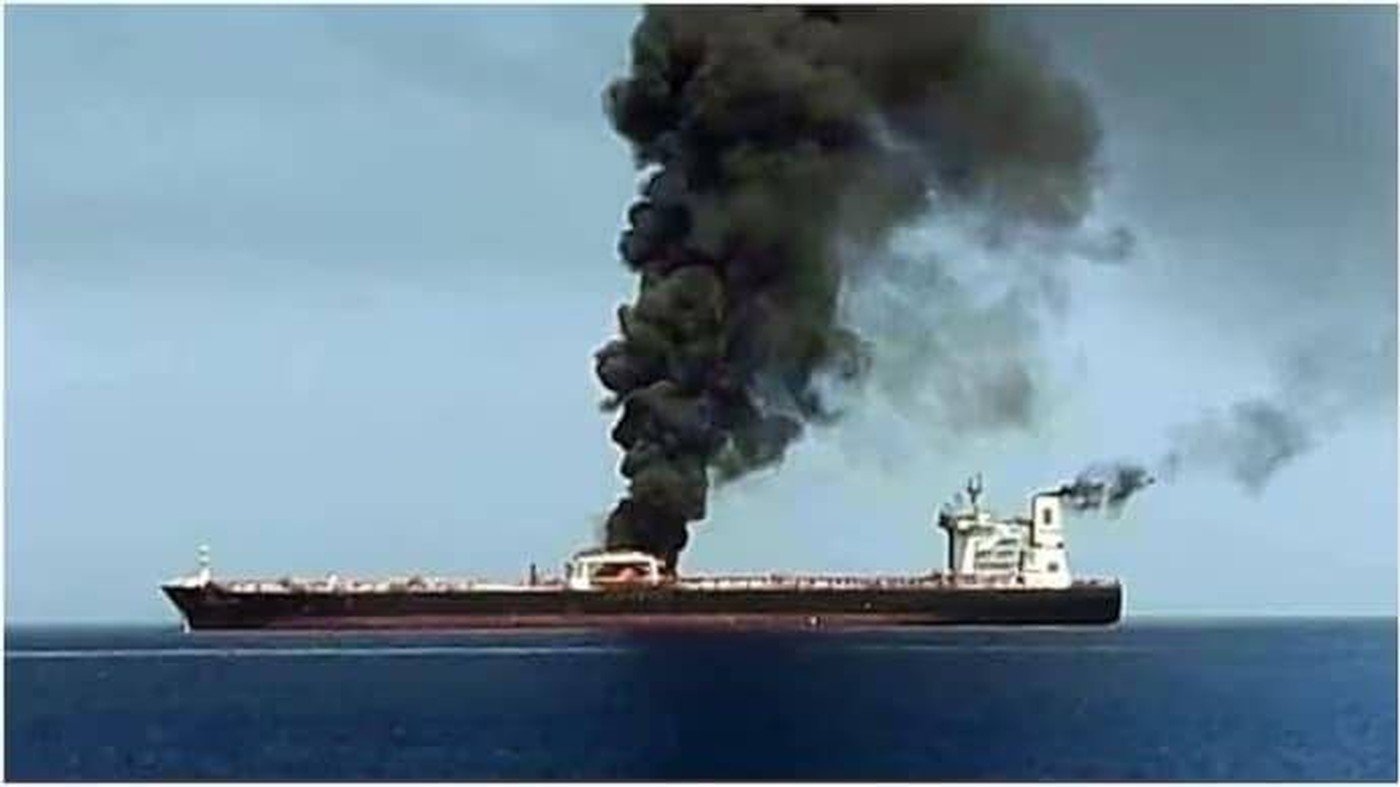
    Two oil tankers were attacked in the Gulf on Friday, killing one sailor and leaving two others missing, in an escalation that sent oil prices higher and put regional forces on alert.

    According to Iranian state media, the Greek-owned, Marshall Islands-flagged tanker Velos Sapphire was hit by a missile and caught fire near the Strait of Hormuz. One crew member was killed, two are missing and two were injured. The crew of 23 abandoned ship, and the naval force of Iran’s Islamic Revolutionary Guard Corps rescued most of them.

    About four hours later, a second tanker, the Panama-flagged Talara, was also hit. No injuries were reported aboard the second vessel. The attacks have not been claimed by anyone, and the Iranian government has condemned them and called for a thorough investigation.

    The incident was confirmed by maritime security sources, which reported that the Velos Sapphire was struck while sailing towards Bahrain and later reached the Bahraini port of Khalifa Bin Salman after the fire was brought under control.

    Oil prices jumped after the attacks, with Brent crude rising above 72 dollars a barrel. The Strait of Hormuz is one of the world’s most important oil shipping routes, and any disruption there is watched closely by energy markets around the world.

    US President Donald Trump said the United States was closely monitoring the situation and was ready to respond if necessary. A US military spokesperson gave the same message, saying forces in the region were watching developments and prepared to act. Iran’s foreign minister said his country would not hesitate to take defensive measures if necessary, and the Iranian armed forces have been put on alert.

    The attacks come at a time of heightened tension in the region, with the United States building up its military presence and pressing Iran to reach an agreement. The two countries have been locked in a standoff over Iran’s nuclear programme and its regional activities.

    Investigations into who carried out the attacks are continuing. Until responsibility is established, shipping companies and insurers will be watching the Gulf closely, and the safety of crews passing through one of the world’s busiest waterways remains the immediate concern.

  • Stocks surge, oil plunges over 8% after US vote

    Stocks surge, oil plunges over 8% after US vote

    Wall Street shares surged and oil prices tumbled on Wednesday as financial markets reacted to the outcome of the United States midterm elections, with investors betting that the result could hasten an end to the US war with Iran.

    Democrats seized control of both houses of Congress in Tuesday’s vote, according to the reports, giving them power to block legislation, open investigations into the Trump administration, and influence government spending, including the Pentagon budget.

    Heading into the vote, some investors had feared that a decisive Democratic win would trouble share prices, in part because of concern about the rapid build-out of artificial intelligence data centres. On the day, however, that worry was outweighed by relief that the election outcome was clear and that President Donald Trump did not contest the result.

    Oil prices were under pressure throughout the session. The selling intensified after Vice President JD Vance said in a social media post that the Republican defeat reflected the unpopularity of the Iran war, which has pushed up fuel and other staple prices.

    Crude finished down more than 8%, with both major contracts closing below 100 dollars a barrel. Brent North Sea crude fell 8.7% to 94.62 dollars a barrel, while West Texas Intermediate dropped 8.3% to 88.12 dollars a barrel.

    Andy Lipow of Lipow Oil Associates was quoted as saying the election might lead the market to conclude that Mr Trump could now be inclined to make a deal, and that with Democrats controlling the Senate and House they might restrict funding for the war, forcing an end to the conflict.

    The fall in oil added momentum to Wall Street, which opened higher after positive sessions on leading European exchanges. All three major US indices finished solidly higher. The Dow ended up 3%, or more than 1,500 points, at 53,356.12, the S and P 500 rose 1.6% to 7,688.62, and the Nasdaq Composite gained 1.4% to 25,736.51.

    Opposition to data centres had fuelled campaigns in key states such as Texas, Georgia and Ohio, where Democrats won governorships previously held by Republicans. Gains by Microsoft, Amazon and other large technology companies suggested markets might see an upside in constraints that deter overbuilding, according to Steve Sosnick of Interactive Brokers, who was quoted as saying that at some level people were happy the industry might be saved from its own worst instincts. Nvidia and other chipmakers, by contrast, fell.

    Both of Elon Musk’s publicly traded companies fell after his large political donations failed to stop the Democratic tide, with SpaceX down 3.8% and Tesla down 3.3%. Lockheed Martin, which fell 6.9%, was among defence companies that retreated, while First Solar jumped 4.6% as the election lifted prospects for renewable energy.

    In Europe, the main indices finished with gains of around 2%, despite official data showing eurozone inflation reached a three-year high of 4.0% in October. London’s FTSE 100 rose 1.8% to 10,829.21, Paris’s CAC 40 gained 2.0% to 8,177.89, and Frankfurt’s DAX climbed 2.2% to 26,437.67.

    Markets across Asia also performed strongly, although Tokyo ended lower as its technology sector struggled. Hong Kong’s Hang Seng Index rose 1.7% to 23,919.50 and Shanghai’s Composite gained 2.2% to 3,686.17, while Tokyo’s Nikkei 225 fell 1.4% to 62,188.63.