Tag: Asif Ali Zardari

  • President House: No Provinces Talk in Zardari-Naqvi Meeting

    President House: No Provinces Talk in Zardari-Naqvi Meeting

    The President House on Friday rejected media reports that President Asif Ali Zardari and Interior Minister Mohsin Naqvi discussed the creation of new provinces during their meeting in Nawabshah a day earlier, saying the talks focused on national security and the regional situation.

    In a statement, the President House said the reports suggesting that provincial matters were discussed during the meeting were incorrect. “Matters concerning national security and the regional situation were discussed during the meeting. However, no discussion took place on matters related to provinces,” the statement said.

    The clarification came after several media reports claimed that the president and the interior minister had discussed the possibility of creating new provinces during their meeting at Zardari House in Nawabshah on Thursday night. No official handout had been issued following the meeting, which fuelled speculation about what was discussed.

    Naqvi had travelled to Nawabshah on a special aircraft for the meeting, which reportedly lasted nearly an hour. He flew in hours after publicly calling for a referendum on the creation of new provinces, saying surveys and public discussion appeared to indicate support for the idea and that the people should formally settle the question.

    The debate over creating new provinces as part of a broader restructuring of the system gained momentum on July 31, when Naqvi called for additional administrative units or provinces to overhaul what he described as the country’s outdated governance system. The proposal has since drawn sharply divided reactions from political parties.

    The Pakistan Peoples Party, which the president belongs to, has opposed any division of Sindh, while other parties have either backed a referendum or called for the matter to be decided through parliament. A referendum alone cannot create a province under the Constitution, and any change would require a constitutional amendment passed by parliament.

    The President House statement gave no further details of the discussion on national security and the regional situation, and it did not mention the referendum proposal. The meeting had taken place against the backdrop of the interior minister’s renewed push for a public vote on new administrative units, which he has argued would improve governance and bring administration closer to the people.

    Officials familiar with the meeting had earlier told reporters that the two leaders discussed matters of mutual interest, but the absence of an official statement after the talks led to conflicting accounts in the media about whether the provinces issue came up. Friday’s clarification put the presidency’s position on record, stating plainly that no discussion relating to provinces took place.
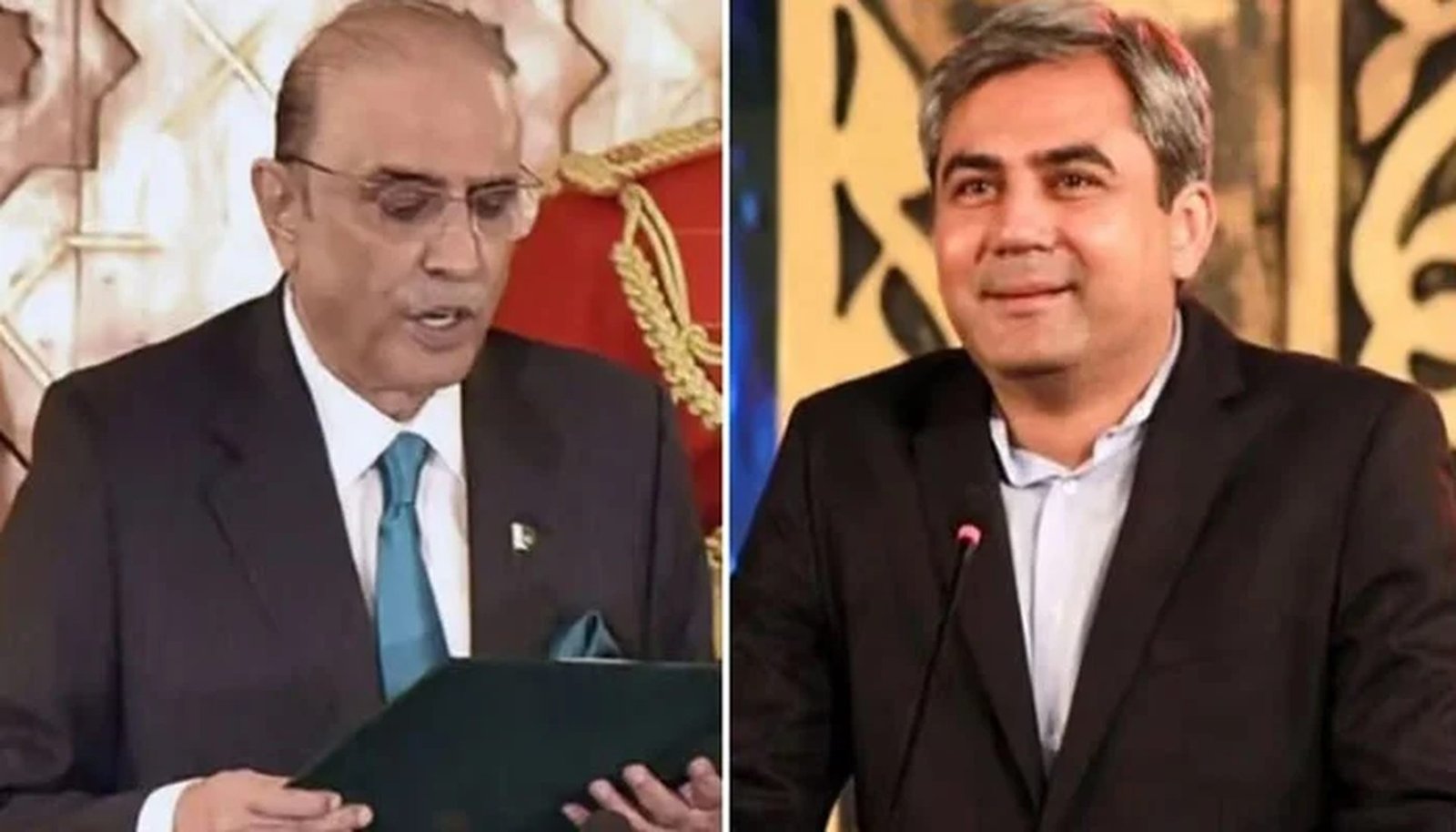
  • Naqvi Meets Zardari in Nawabshah Amid Political Reset Talk

    Naqvi Meets Zardari in Nawabshah Amid Political Reset Talk

    NAWABSHAH: Federal Interior Minister Mohsin Naqvi held a nearly hour-long, one-on-one meeting with President Asif Ali Zardari at Zardari House in Nawabshah on Thursday night, as speculation grows about a possible political “reset” in the country.

    According to sources familiar with the meeting, the two leaders held detailed discussions on the creation of new administrative units and the possibility of a 28th Constitutional Amendment, the two issues that have dominated political debate in recent days.

    The meeting also covered the PTI founder’s recent meeting with his lawyers and the release of his sisters, and the possible political implications of these developments. President Zardari, according to the sources, stressed the need for negotiations with opposition parties to resolve outstanding political issues.

    The prevailing political and law-and-order situation in Khyber Pakhtunkhwa also came under discussion. Naqvi briefed the president on the measures being taken to maintain peace and security in the country.

    Why the meeting matters

    The meeting is being seen as significant because it came only hours after Naqvi’s media talk in Lahore, where he proposed holding a public referendum on the creation of new provinces and said the people, not political parties alone, should decide the question.

    PPP Chairman Bilawal Bhutto Zardari had called for a “political reset” rather than new provinces during an address in Larkana on Monday, arguing that the country’s economic hardships made such a course necessary. The PPP strongly opposes the creation of new provinces in Sindh, and the Sindh Assembly has passed a resolution rejecting any division of the province.

    Reports have also suggested that a proposal to reorganise Pakistan into 12 provinces is under consideration, with a nationwide referendum envisaged ahead of a possible 28th Amendment. Under the reported plan, Punjab could be divided into four provinces, Khyber Pakhtunkhwa and Balochistan into three each, and Sindh into two, although no final decision has been taken.

    Reports also said the Nawabshah meeting touched on possible action against the Jamiat Ulema-e-Islam-Fazl (JUI-F), although no details of any decision emerged. No official statement was issued about the meeting, and the specific outcomes of the discussion could not be independently confirmed.

    Naqvi travelled to Nawabshah on a special aircraft for the unscheduled visit and left Zardari House after the meeting, according to reports. Both leaders are expected to remain in contact as consultations on the political situation continue.

  • Munir becomes Pakistan’s first Chief of Defence Forces

    Munir becomes Pakistan’s first Chief of Defence Forces

    Field Marshal Syed Asim Munir has become Pakistan’s first Chief of Defence Forces, after the president approved his appointment to the newly created post on Thursday evening.

    According to the Prime Minister’s Office, Prime Minister Shehbaz Sharif approved a summary appointing Field Marshal Munir as Chief of Army Staff and concurrently as Chief of Defence Forces, and sent it to the Presidency for approval. President Asif Ali Zardari then approved the appointment, confirming Munir’s expanded role.

    The appointment is for a period of five years. Field Marshal Munir will continue as Chief of Army Staff while also holding the new post, making him the first officer in the country’s history to lead the armed forces in this combined role.

    The post of Chief of Defence Forces was created through the 27th Constitutional Amendment, passed by parliament last year, which was designed to improve coordination among the army, navy and air force. Under the new arrangement, the Chief of Defence Forces oversees all three services, replacing the earlier system in which a separate chairman led the Joint Chiefs of Staff Committee.

    The prime minister also approved a two-year extension in the service of Chief of Air Staff Air Chief Marshal Zaheer Ahmed Baber Sidhu. The extension will take effect when his present five-year tenure ends in March 2026.

    In its statement, the Prime Minister’s Office said the appointment would strengthen coordination between the services at a time when the armed forces face complex security challenges on several fronts. The president extended his best wishes to Field Marshal Munir and to the air chief for their tenures.

    Field Marshal Munir was promoted to the rank of field marshal earlier this year, and his appointment as Chief of Defence Forces marks another milestone in a career that has already seen him lead the army through a period of intense regional tension.

    The creation of the post has been the subject of debate in parliament and in the media, with supporters arguing that a single commander for the three services will improve planning and decision-making, while critics have questioned the concentration of military authority in one office.

    For now, the formal process is complete: the prime minister’s summary has been approved by the president, and the appointment stands for five years. The formal notification will follow the approval process, as is customary for senior military appointments.

    The development comes as Pakistan’s armed forces continue to deal with security threats along the western border and tensions in the wider region, and the new command structure is expected to shape how the three services work together in the years ahead.

    Observers will now watch how the new role is defined in practice, including the division of responsibilities between the Chief of Defence Forces and the individual service chiefs, and how the change affects the day-to-day running of the armed forces.

  • KP Emergency: Governor’s Rule Imposed in Khyber Pakhtunkhwa

    KP Emergency: Governor’s Rule Imposed in Khyber Pakhtunkhwa

    ISLAMABAD: The federal government on Sunday imposed emergency and governor’s rule in Khyber Pakhtunkhwa after President Asif Ali Zardari signed the summary on the advice of Prime Minister Shehbaz Sharif, following the federal cabinet’s approval of the recommendation. The move, taken under Articles 232 and 234 of the Constitution, took immediate effect.

    According to a statement issued by the President’s Office, the president signed the summary after the federal cabinet’s decision, the prime minister’s advice, reports from relevant institutions on the law and order situation, and what it described as the failure of negotiations with government delegations. A government gazette notification said the proclamation was issued under Articles 232(1) and 234(1) of the Constitution.

    The proclamation cites what it calls an extraordinary increase in terrorist incidents and violent activities in the province as the reason for the emergency, stating that the attacks pose serious threats to the lives and property of the public. It further states that attacks by militants on infrastructure, government installations and law enforcement agencies have increased, and claims that the provincial government failed to address these threats effectively.

    According to the proclamation, a report by the K-P governor identified a failure of the constitutional system in the province, adding that the situation had moved beyond the control of the provincial government. It describes the situation as a threat not only to K-P but also to Pakistan’s overall security.

    Under the measures outlined in the proclamation, the federal government may direct the K-P governor to assume all or some of the provincial government’s powers, while the powers of the K-P Assembly are to be exercised by Parliament or a body authorised by it. Under the notification, the K-P chief minister, provincial ministers, advisers, special assistants and the advocate general immediately ceased to hold their offices.

    Law Minister Azam Nazeer Tarar told a news conference in Islamabad that the governor would initially be in place for six months but could stay for as long as needed. He said the constitution allows the government to take over from provincial authorities during an emergency. Interior Minister Mohsin Naqvi said the situation was so grave that residents in some districts were not coming out of their homes after evening, according to reports.

    The federal government also issued a formal order authorising the deployment of army troops to assist the civil administration under Article 245 of the Constitution for the period covered by the proclamation. The K-P governor, in consultation with the General Headquarters’ Directorate of Military Operations, will determine the number of troops and resources to be deployed.

    The federal government also appointed Dr Muhammad Fakhr Alam Irfan, a Grade-22 Pakistan Administrative Service officer previously serving as Power Division secretary, as the new K-P chief secretary.

    The Pakistan Tehreek-e-Insaf, which led the provincial government, rejected the federal government’s charge and said Islamabad had failed to provide it with the funding and equipment it needed to fight militancy, according to Reuters. The party described the move as a coup disguised as an emergency. The escalation comes about a week after PTI supporters gathered in the province intending to march on Islamabad to demand the release of jailed former prime minister Imran Khan.