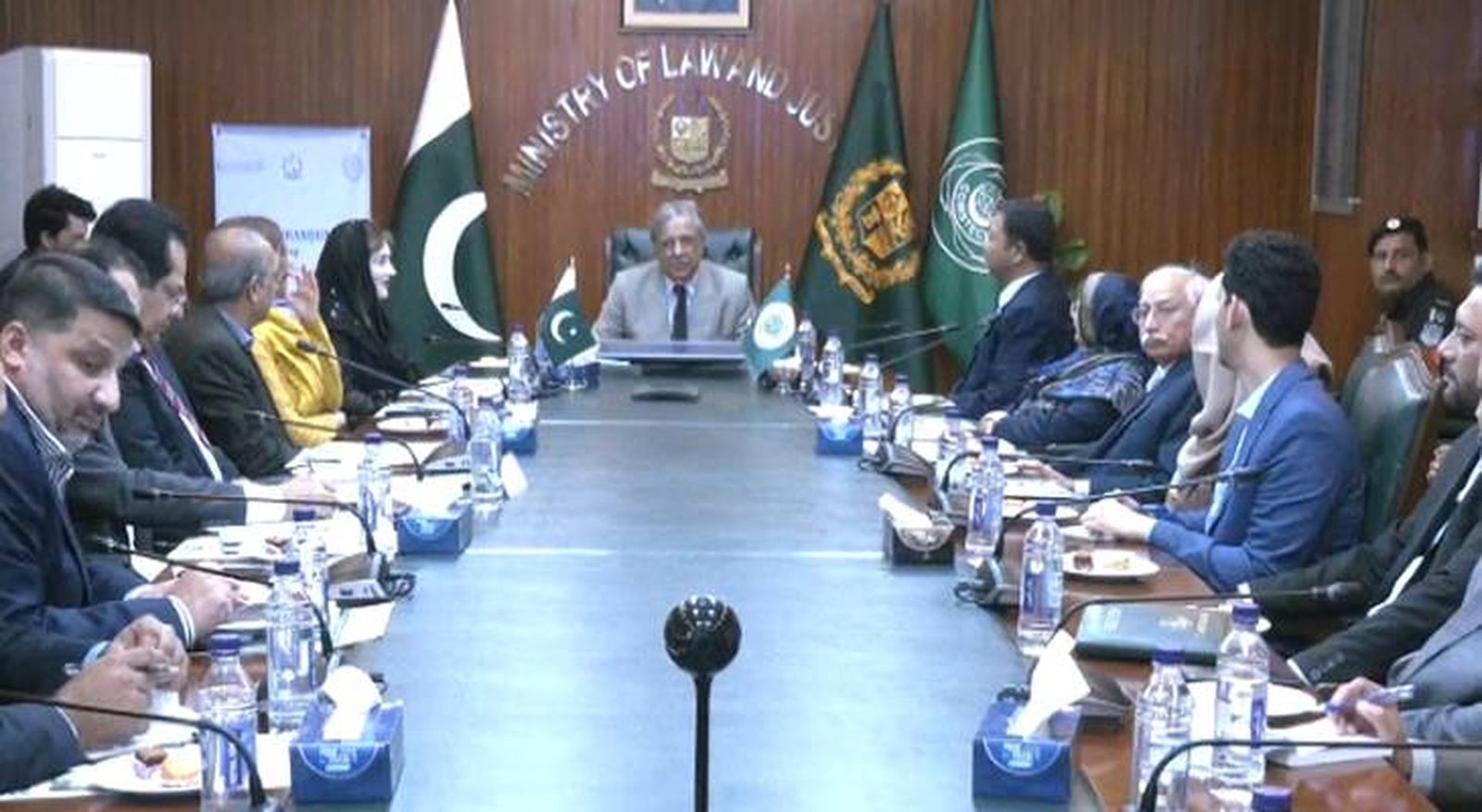
The Ministry of Law’s International Mediation and Arbitration Center (IMAC) and the Organisation of Islamic Cooperation’s COMSTECH have signed a Memorandum of Understanding (MoU) to strengthen cooperation in training, research and international collaboration, reported 24NewsHD TV.
According to an official statement, the agreement was signed in the presence of Federal Law Minister Azam Nazeer Tarar.
Under the MoU, both organisations will promote joint training programmes, research initiatives, exchange of experts and international cooperation. The agreement is aimed at building institutional links between the two bodies and expanding their work in alternative dispute resolution.
Speaking on the occasion, the law minister said there was a need to strengthen the Alternative Dispute Resolution (ADR) system through an effective institutional framework to reduce the burden of pending cases on courts.
He said resolving disputes through arbitration and mediation could provide relief to citizens by saving them from lengthy court proceedings. The minister noted that an effective ADR system could help cases move faster and reduce the pressure on the formal court system.
Azam Nazeer Tarar further stated that hundreds of individuals had received training in arbitration and mediation over the past 18 to 24 months. The agreement between IMAC and COMSTECH is expected to build on that work by expanding joint training and research in the field.
COMSTECH is the Ministerial Standing Committee on Scientific and Technological Cooperation of the Organisation of Islamic Cooperation, while IMAC operates under Pakistan’s Ministry of Law and Justice as a centre for mediation and arbitration. The agreement brings the two institutions together to share expertise and develop joint work in dispute resolution.
Alternative dispute resolution covers methods such as arbitration and mediation, in which disputes are settled outside the formal court process. Supporters of the system say it can resolve disputes more quickly and at lower cost than litigation, and can help reduce the large number of cases waiting to be heard in courts.
The law minister’s remarks at the signing pointed to the pressure on the courts from pending cases and the need for institutional arrangements that give citizens faster routes to resolve their disputes. The MoU is intended to support that goal through training, research and the exchange of experts between the two organisations.