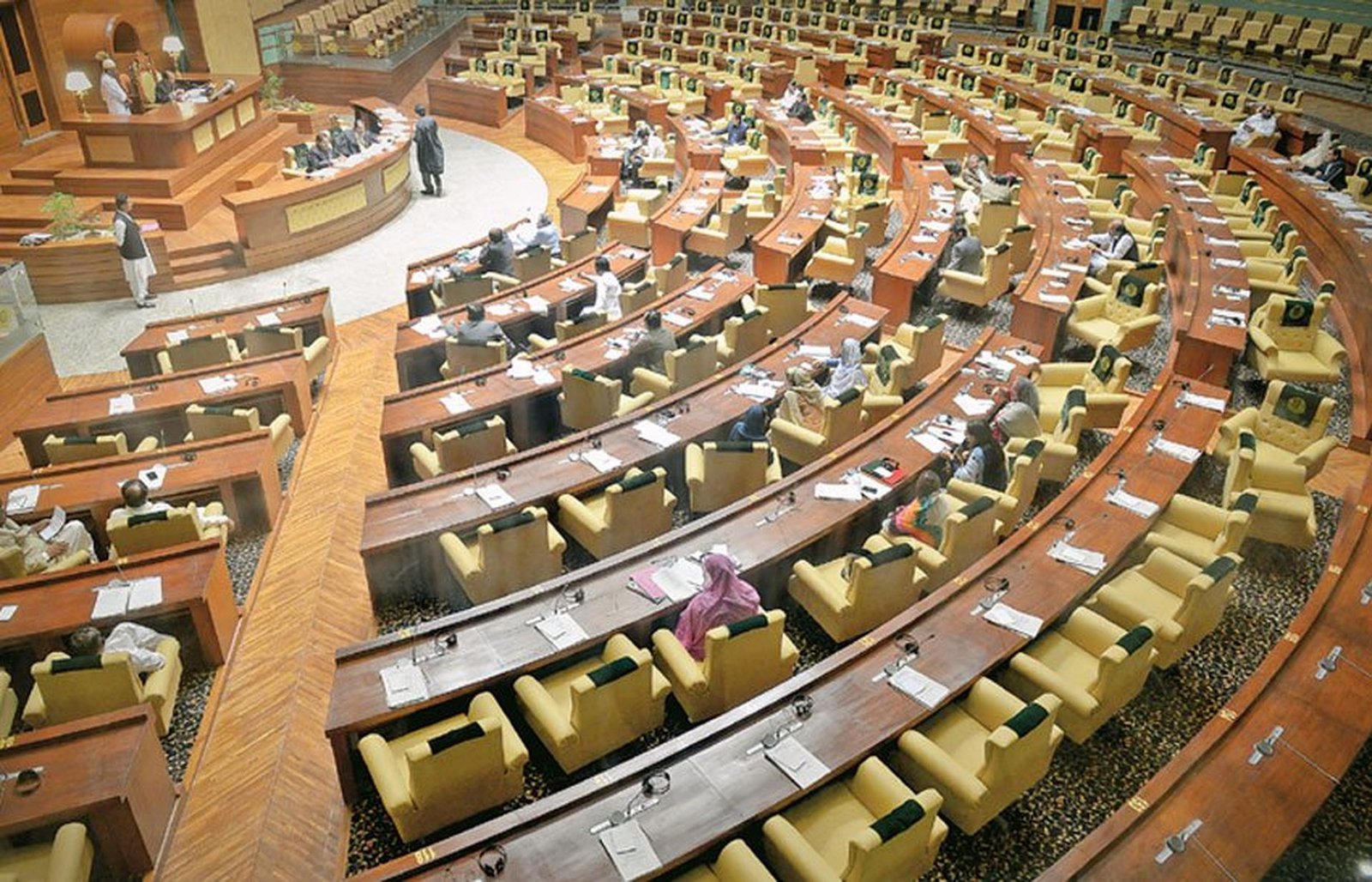
A session of the Sindh Assembly turned into a long list of civic complaints on Monday, as lawmakers raised gas load-shedding, water shortages, power cuts and the poor state of facilities in katchi abadis across the province.
The session, chaired by Speaker Awais Qadir Shah, began with question hour on the katchi abadis department, during which provincial adviser Najmi Alam answered written and supplementary questions from members.
Muttahida Qaumi Movement-Pakistan legislator Farah Sohail asked how informal settlements would be protected against the risks posed by climate change, floods and heavy rainfall. Alam told the House that his department was issuing land leases to eligible settlements, while plans were being made to relocate those that could not be regularised legally.
He made it clear that no settlement would be granted a lease within 50 feet of a drainage channel, and that settlements situated on or near flood protection embankments would not be regularised, because such areas were vulnerable to flooding during heavy rainfall.
MQM-P legislator Aamir Siddiqui pointed out that even settlements established 40 to 50 years ago continued to lack proper sewerage systems and access to clean drinking water — a reminder, members said, that regularisation on paper had not translated into basic facilities on the ground.
Water shortages dominated the call-attention notices. Faisal Rafiq asked about the acute shortage of water in his constituency PS-103 and when the motors of the pumping stations in Lines Area would be replaced, while Syed Adil Askari raised the severe water crisis in District Central and East. An adjournment motion by Sumeta Afzal Syed took up the grave issue of prolonged and unannounced gas load-shedding across Sindh.
Local Government Minister Saeed Ghani, responding to a call-attention notice by Sajjad Soomro of the Sunni Ittehad Council, told the House that not a single Karachi-based agency or building owned by the provincial government had defaulted on paying its electricity bills to K-Electric, yet all of them faced power load-shedding every day.
Ghani said the power cuts also hit the pumping stations of the Karachi Water and Sewerage Corporation, and that the sewerage system of Lyari depended entirely on those pumping stations. He said a study had been undertaken under the Lyari Transformation Project to rehabilitate the area’s streets, roads, sewerage and water supply systems, and that the schemes would be included in the Annual Development Programme in the coming financial year’s budget.
On water supply, Ghani told the House that the Hub Dam provided a 56-hour supply every 15 days, while the University Reservoir supplied water for around 18 hours daily, and that repair work on the Hub Dam canal was moving swiftly and would be completed by the end of the year.
Leave a Reply